Switched Reluctance Motors (SRMs) have gained significant attention in various industrial applications due to their numerous advantages, such as high efficiency, robustness, and wide speed range. As a leading supplier of Switched Reluctance Motors, I understand the importance of effective control strategies to optimize the performance of these motors. In this blog, I will delve into the different control strategies for Switched Reluctance Motors, discussing their principles, advantages, and applications. Switched Reluctance Motor
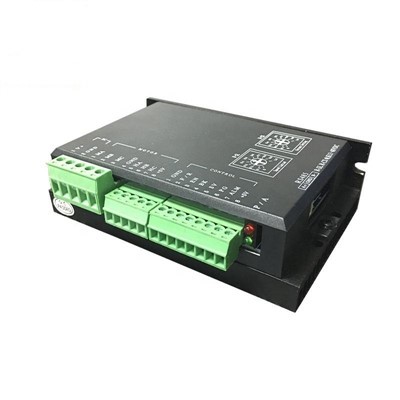
1. Current Control Strategies
Hysteresis Current Control
Hysteresis current control is a simple and effective method for controlling the current in SRMs. The basic principle is to compare the actual current with a reference current. If the actual current exceeds the upper limit of the hysteresis band, the power switch is turned off. Conversely, if the actual current falls below the lower limit, the power switch is turned on. This control method has a fast response time and can effectively track the reference current. However, it may cause high-frequency switching, leading to increased electromagnetic interference (EMI) and switching losses.
The advantage of hysteresis current control is its simplicity and robustness. It can adapt to different load conditions and motor parameters without complex parameter tuning. In applications where fast dynamic response is required, such as servo systems, hysteresis current control can provide good performance.
PI Current Control
Proportional – Integral (PI) current control is another widely used method. The PI controller calculates the error between the reference current and the actual current, and then generates a control signal to adjust the power switch. The proportional term provides a fast response to the current error, while the integral term eliminates the steady – state error.
PI current control offers better control accuracy compared to hysteresis current control. It can reduce the high – frequency switching and EMI. However, it requires accurate parameter tuning to achieve optimal performance. In applications where high – precision current control is needed, such as electric vehicles, PI current control is a preferred choice.
2. Torque Control Strategies
Direct Torque Control (DTC)
Direct Torque Control is a popular torque control strategy for SRMs. The basic idea is to directly control the torque and flux of the motor. By selecting appropriate voltage vectors, the torque and flux can be quickly adjusted to the desired values. DTC has a fast torque response and can effectively reduce the torque ripple.
The advantage of DTC is its simplicity and fast dynamic response. It does not require complex coordinate transformation and can directly control the torque. However, DTC may cause high – frequency torque ripple and variable switching frequency, which may lead to increased EMI and acoustic noise.
Torque Sharing Function (TSF)
Torque Sharing Function is a more advanced torque control strategy. It distributes the total torque demand among different phases of the SRM based on a predefined function. By adjusting the current in each phase, the torque ripple can be significantly reduced.
TSF offers better torque ripple reduction compared to DTC. It can also improve the efficiency of the motor by optimizing the current distribution. However, it requires more complex control algorithms and accurate knowledge of the motor’s magnetic characteristics.
3. Speed Control Strategies
Open – Loop Speed Control
Open – loop speed control is the simplest speed control method for SRMs. It sets the switching frequency of the power converter according to the desired speed. The motor speed is proportional to the switching frequency. However, this method does not consider the load variations and motor parameters, so the speed accuracy is relatively low.
Open – loop speed control is suitable for applications where the load is relatively stable and the speed accuracy requirement is not very high, such as some low – cost industrial fans.
Closed – Loop Speed Control
Closed – loop speed control uses a speed sensor to measure the actual speed of the motor and compares it with the reference speed. The error between the two is then used to adjust the control signal of the power converter. This method can effectively compensate for the load variations and improve the speed accuracy.
There are different types of closed – loop speed control, such as PI speed control and fuzzy speed control. PI speed control is widely used due to its simplicity and good performance. Fuzzy speed control can handle the nonlinear characteristics of the motor and provide better control performance in complex operating conditions.
4. Application – Specific Control Strategies
Electric Vehicle Applications
In electric vehicle applications, the control of SRMs needs to consider factors such as high – efficiency operation, fast torque response, and regenerative braking. The torque control strategy should be able to provide smooth and fast torque changes to meet the driving requirements. The speed control strategy should ensure accurate speed regulation under different load conditions.
For example, a combination of DTC and PI speed control can be used to achieve high – performance operation of SRMs in electric vehicles. DTC can provide fast torque response, while PI speed control can ensure accurate speed regulation.
Industrial Automation Applications
In industrial automation, SRMs are often used in conveyor systems, robotic arms, and other equipment. The control strategy should focus on reducing torque ripple, improving efficiency, and ensuring stable operation. TSF can be a good choice for reducing torque ripple, and closed – loop speed control can ensure accurate speed regulation.
5. Choosing the Right Control Strategy
The choice of control strategy for SRMs depends on various factors, such as the application requirements, motor parameters, and cost. For applications that require fast dynamic response and high – precision control, such as servo systems, DTC or PI current control combined with closed – loop speed control may be suitable. For applications where cost is a major concern and the load is relatively stable, open – loop speed control or simple hysteresis current control may be sufficient.
As a Switched Reluctance Motor supplier, we have rich experience in providing customized control solutions for different applications. We can help our customers choose the most appropriate control strategy based on their specific requirements.
Conclusion
In conclusion, the control strategies for Switched Reluctance Motors play a crucial role in optimizing their performance. Different control strategies have their own advantages and disadvantages, and the choice of strategy should be based on the specific application requirements. As a supplier, we are committed to providing high – quality Switched Reluctance Motors and customized control solutions to meet the diverse needs of our customers.
Brushless Motor If you are interested in our Switched Reluctance Motors or need more information about control strategies, please feel free to contact us for further discussion and potential procurement. We look forward to working with you to achieve optimal motor performance in your applications.
References
- Krishnan, R. (2001). Switched Reluctance Motor Drives: Modeling, Simulation, Analysis, Design, and Applications. CRC Press.
- Miller, T. J. E. (1993). Switched Reluctance Motors and Their Control. Magna Physics Publishing.
- Rahman, M. A., & Zhu, Z. Q. (2002). Power Electronics and Motor Drives: Advances and Trends. John Wiley & Sons.
Zibo Auric Mechanical and Electrical Technology Co., Ltd.
As one of the leading switched reluctance motor manufacturers and suppliers in China, we warmly welcome you to buy advanced switched reluctance motor for sale here from our factory. All customized motors are with high quality and competitive price.
Address: B419, High-tech Entrepreneurship Park, High-tech Zone, Zibo City
E-mail: cui@auricmotor.com
WebSite: https://www.auricmotor.com/
